1. Assess the scene
The cleanup team looks at what happened, how far the contamination spread and what the surfaces are made of. That sets the plan, the protective gear and the products.
Round Rock, TX · Williamson County
Is there a stain, a spill or a smell in Round Rock that ordinary cleaning cannot fix? Call (877) 812-4220. Crews clean up body fluids, remove soaked items and treat lingering odor.
If anyone is in danger, call 911 first. For a suicide crisis, call or text 988.
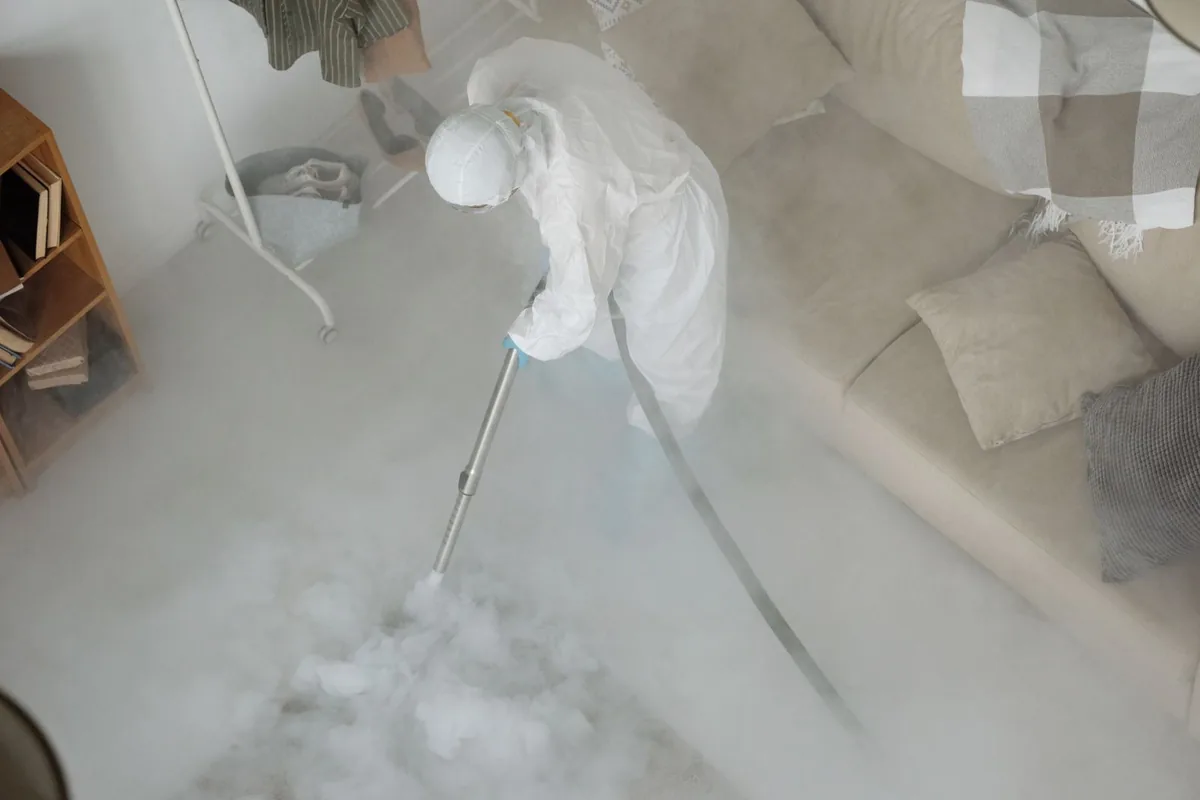
Biohazard cleanup is cleaning with a safety plan. Crews wear PPE, limit the spread of contamination, remove saturated materials and treat every affected surface so that bloodborne pathogens are not left behind.
If contamination is found at your property in Round Rock or elsewhere in Williamson County, call Round Rock Biohazard Cleanup Help and get one team for the whole job. That means containment, removal of soaked materials, disinfection, odor treatment and waste disposal.
Many Round Rock homes are rentals, around 44% of households, and the lease decides who pays when biohazard cleaning is needed. When the Williamson County Sheriff's Office has released a scene in Williamson County, the cleanup team can begin containment, removal and disinfection.
A typical biohazard cleanup job includes:
The cleanup team looks at what happened, how far the contamination spread and what the surfaces are made of. That sets the plan, the protective gear and the products.
The team arrives in an unmarked vehicle and works quietly. Protective gear goes on at the door and the work area is isolated right away.
Contaminated debris and soaked materials come out first. Floors, walls and fixtures are then scrubbed, rinsed and treated with a hospital-grade disinfectant.
Waste is packed for regulated hauling, and odor is treated at its source. The crew shows the owner the finished area and explains the paperwork.
Biohazard cleanup in Round Rock, TX typically costs $1,500 to $25,000, depending on the size of the affected area and the materials involved.
What the material is matters too. Sewage, blood, decomposition and sharps each call for different gear, disinfectants and waste handling, and that shapes the total.
| Type of job | Typical range |
|---|---|
| Full published span | $1,500 - $25,000+ |
| Typical national range | $3,000 - $5,000 |
| Residential average range | $1,800 - $4,500 |
| Most residential projects | $2,500 - $8,000 |
Published ranges only (Fixr, Yelp Costs, Biohazard cleanup cost guide from a biohazard cleanup company); every biohazard cleanup job in Round Rock is priced after an on-site look. Price drivers include type of contamination, size of the affected area, how far fluids soaked into porous materials, waste handling and disposal. Questions? Call (877) 812-4220.
The OSHA Bloodborne Pathogens Standard, 29 CFR 1910.1030, protects workers who may contact blood or other infectious material. Professional crews follow its rules on PPE, handling and waste. Employers have their own duties, and safety staff can explain them.
Yes, when the source is removed. Odors from decomposition, sewage or fluids live in porous materials and subfloors, so crews take those out and treat the air. Air fresheners only cover a smell for a short time.
Yes. Many calls come from managers who need a unit made safe for the next tenant. The lease and local law decide who pays, and the crew can provide photos and records for the owner or insurer.
Most cleanup is priced by the job instead of by the hour, because the work depends on the scene. Ask what a quote covers, such as labor, materials, waste and travel. That makes it easier to compare companies.
It can be. Bloodborne pathogens, sharps and airborne particles pose real risks, and a mistake can spread contamination through a home. Professional crews use gear, containment and procedures built for the job.
Frequently. If a policy covers the event, it can pay after the deductible. The Texas Crime Victims' Compensation Program, run by the Office of the Attorney General, pays up to $2,250 for crime scene clean-up for crimes after July 14, 2016, with insurance used first and claims filed within three years. Questions go to (800) 983-9933.
One call starts the process, and you decide whether to go ahead.
Call (877) 812-4220